

Law 287: Panama’s National Rights of Nature Law
In 2022, Panama passed Law 287, a historic national law recognizing the Rights of Nature. This law established Nature as a subject of rights in Panama and affirmed that the State and society have obligations to respect, protect, and restore the natural systems that sustain life.
Law 287 marked a major milestone not only for Panama but for the global Rights of Nature movement. It placed Panama among a small but growing group of countries that have taken national-level action to recognize that ecosystems, species, and natural communities have inherent rights.
For forNature, Law 287 represents one of the clearest examples of how legal systems can begin to shift from treating Nature as property toward recognizing Nature as a living community with its own integrity, intrinsic value, and rights.
What the Law Recognizes
Law 287 recognizes Nature as a subject of rights and establishes legal obligations related to the protection and restoration of Nature. The law affirms that Nature has rights connected to its existence, regeneration, restoration, and the preservation of ecological cycles.
The law also creates a foundation for public institutions, citizens, and legal actors to consider the Rights of Nature in decision-making, enforcement, and governance.
Article 16. The State, through all its institutions, shall have the following obligations derived from the rights recognized in this Law:
1
Ensure that all of its plans, policies, and programs are aligned with the rights and obligations recognized in this Law.
2
Promote the full application and fulfillment of the rights and obligations recognized in this Law.
3
Ensure the participation of the population, with special attention to groups in vulnerable situations, in the development and implementation of policies, plans, and programs aimed at guaranteeing respect for the Rights of Nature.
4
Develop balanced forms of production and consumption patterns to meet the needs of the population while safeguarding the regenerative capacities and integrity of Nature’s vital cycles, processes, and balances.
5
Develop energy policies to ensure, over the long term, increased efficiency and the incorporation of clean and renewable alternative sources into the energy matrix.
6
Incorporate the teaching of the Rights of Nature into environmental education programs.
7
Promote the recognition and defense of the Rights of Nature in multilateral, regional, and bilateral international relations.
Rights of Nature Implementation Measures
Since adopting the Rights of Nature framework, Panama has taken several steps to put the law into practice.
2022
Panama's National Air and Naval Service established an Environmental Committee to support the implementation of Law 287.
March 1, 2023
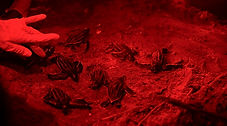
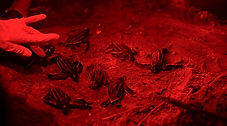
Panama enacted Law 371, recognizing the rights of sea turtles and their habitats.
November 28, 2023
Panama's Supreme Court declared the CobMarch 1, 2023re Panamá copper mine unconstitutional, citing the country's Rights of Nature law.
2024
Panama's Supreme Court halted a major highway project that would have crossed a wildlife corridor, citing the precautionary principle and the Rights of Nature.
September 2024
Panama established the Saboga Wildlife Refuge in the Pearl Islands. The designation recognized nature as a subject of rights and was supported by sea turtle research conducted by the Leatherback Project.
The People Behind the Law
Law 287 was the result of a collaborative effort involving lawmakers, government leaders, legal experts, conservation organizations, scientists, Indigenous Peoples and advocates who worked together to advance recognition of the Rights of Nature in Panama.
With the passage of Law 287, Panama became one of the first countries to recognize the Rights of Nature in national law. The legislation established a new legal framework that recognizes nature as a subject of rights and has helped shape conservation, environmental governance and public policy.
The individuals and organizations recognized here helped shape, advance and secure the passage of Law 287 through their leadership, expertise and collaboration.










Panama's Rights of Nature Law No. 287 just won the Future World Policy Award from the World Future Council!
Nearly one-third of Panama’s land and more than half of its ocean territory are under conservation, surpassing the international 30x30 target years ahead of schedule. These commitments not only safeguard biodiversity and climate resilience at home, but also set a precedent for countries everywhere seeking to scale up conservation and embed Rights of Nature into governance.
Panama is inspiring the world by demonstrating what ecocentric governance looks like in practice. By recognizing nature as a subject of rights, Panama has shifted governance toward an ecocentric model that aligns law with ecological reality.
Press




.avif)


